Grease trap pumping clears fats, oils, grease and solids before they reach 25 percent of the liquid depth, the point where a trap stops working. Akron Porta Pros services restaurant and commercial kitchen traps on a set schedule or same-week call, with most jobs booked inside a day or two, alongside our broader construction site services and farm and agricultural restrooms work.
Most commercial kitchens need service every one to three months, but the honest answer depends on volume. A busy fryer-heavy kitchen fills faster than a coffee shop, similar to how a high-traffic job site needs more frequent service than the baseline described in our how many porta potties do I need guide. The rule that matters is the 25 percent depth mark: once fats, oils, grease and solids hit that line, the trap can't separate water from waste anymore, and grease starts moving downstream into the line. Akron Porta Pros checks depth at every visit and tells you straight if you can stretch the interval or need to shorten it. This is a different clock than a residential septic tank, which typically goes 3 to 5 years between pumpings depending on tank size and household size, covered in more depth on our septic tank pumping guide. If your kitchen shares a building with other tenants, get everyone's schedule lined up, because one overflowing trap backs into everyone's line, the same reasoning we use when placing a standard porta potty rental or ADA accessible porta potty for shared job sites. We also handle septic pumping service and septic tank cleaning for properties that need both systems watched.
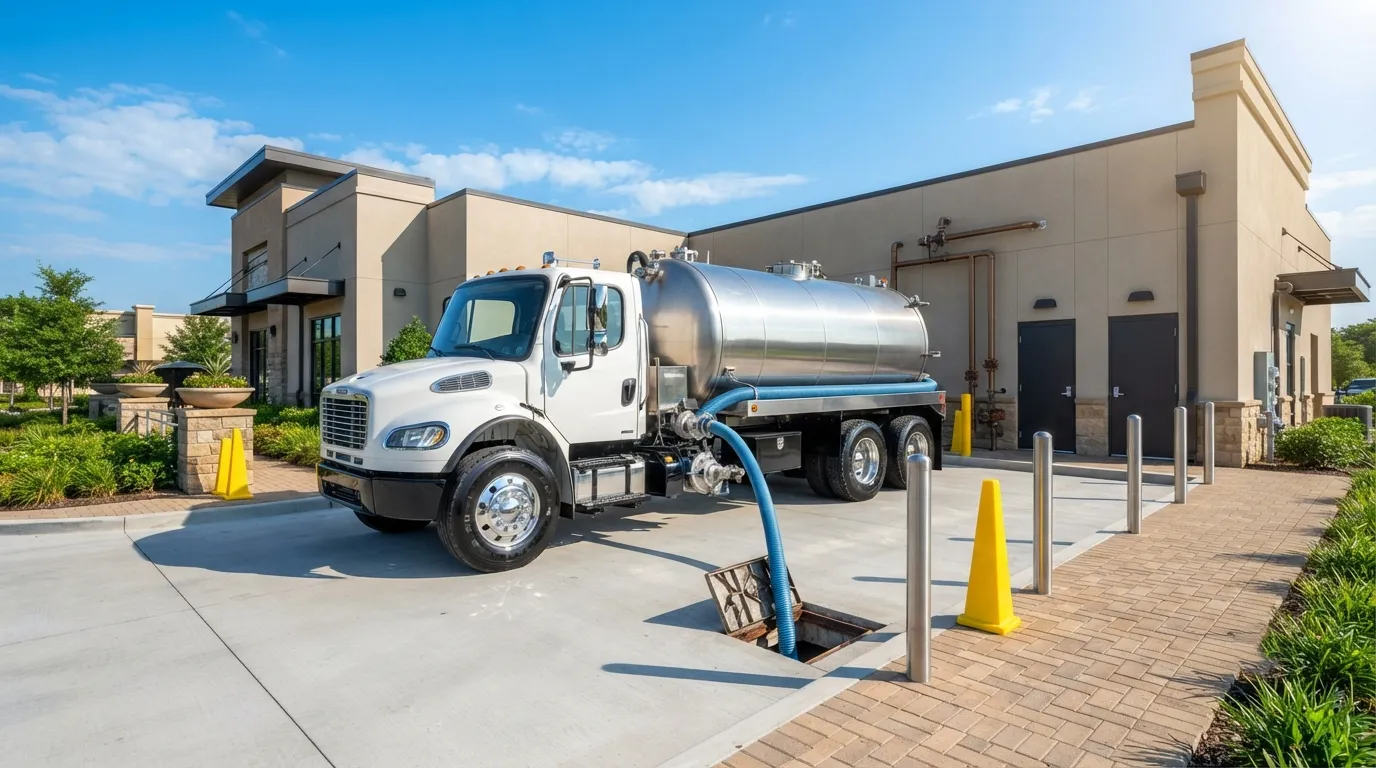
Pricing depends on trap size, grease load and how far out the service truck has to travel, much like dumpster rental cost shifts with distance and job size. A single scheduled pump-out for a standard commercial trap runs in line with regional septic service calls, and rush or after-hours work costs more than a planned visit. Here's how the timing options generally stack up:
| Service type | Typical range |
|---|---|
| Scheduled day visit | $150 to $300 |
| Weekend or rush call | $50 to $150 add-on |
Ask about a recurring contract if you're a restaurant, brewery, or food truck commissary in Akron, the same way a construction crew might set up recurring service through porta potty rental in Akron or check porta potty rental cost before booking. A fixed schedule usually costs less over a year than a string of emergency calls. For a broader comparison across septic and holding tank pricing, see our septic tank pumping cost breakdown, and if your kitchen also needs a temporary holding tank during a remodel, check holding tank rental.
Yes. A backed-up trap doesn't wait for a Monday appointment, and Akron Porta Pros runs emergency grease trap pumping for kitchens that smell trouble coming or already have a slow drain. We cover Akron and the towns around it, including Tallmadge 6.5 miles east, Barberton 8.2 miles southwest, and Cuyahoga Falls 9.0 miles north. If you're further out toward Kent, 14.1 miles northeast, or Green, 10.8 miles south, we still run calls, just build in a little more drive time. Check service areas for the full coverage map. For general emergency sanitation beyond grease traps, our emergency septic service page covers overflow calls, and emergency porta potty rental covers restroom needs during a shutdown. A trap left too long can force a kitchen closed, so treat rising odor or slow drains as a same-day call, not a next-week one, the way a porta potty rental checklist treats sanitation as non-negotiable before opening day.
Commercial kitchens count as places of employment under general sanitation rules, and OSHA 1926.51(a)(1) requires an adequate supply of potable water at any site where people work, which matters if your grease trap backup is affecting sink access. Handwashing after work involving contaminants also falls under 29 CFR 1910.141(d)(2), which requires soap and towels or a hand-drying device, not sanitizer alone. If your renovation or kitchen build-out needs handwashing stations while plumbing is offline, see handwashing station rental or portable sink rental, and pair it with handwashing requirements or a home renovation porta potty for the rest of the crew.
Slow drains, gurgling sinks, and a sour smell near the trap access are the first signs. Once grease and solids approach 25 percent of the tank's liquid depth, separation stops working. Don't wait for a full backup. Schedule a check with septic tank warning signs as a reference for related red flags.
Yes. A grease trap targets fats, oils, and grease from kitchen drains, while a septic system handles all household or building wastewater. Both need pumping on a schedule, but grease traps fill faster in food service settings. See septic pumping service for full-system work.
Rush and weekend calls cost more than scheduled visits, generally an add-on above the standard day rate. Exact cost depends on trap size and how urgent the backup is. Call Akron Porta Pros directly for a same-day quote, or start with request a quote and our FAQ page for general policy questions.
Yes, restaurant groups and shared commercial kitchens can set up a rotating schedule across several traps. This keeps costs predictable and avoids overflow between tenants sharing a line. Ask about a recurring contract when you request service.
Pumping itself typically doesn't require a permit, but disposal and any related dumpster or construction work might. Check dumpster permit requirements if your grease trap service overlaps with a larger renovation project.
Yes. Akron Porta Pros delivers grease trap pumping across Akron and the surrounding metro, with same-day and next-day drop-off available on most orders.
Pricing depends on the unit and how long you need it. See our cost breakdown and request a free quote for an exact figure.
Standard rentals include scheduled service — a pump-out, a clean, a restock and fresh deodorizer. Busy or hot-weather sites can be serviced more often.
Call now or request a free quote — clean units, on-time delivery, transparent pricing.