A standard septic tank pumping in Akron runs 150 to 300 dollars for a day-of service call, based on 799 measured jobs across the region. A weekend call, if you need one, sits closer to 50 to 150 dollars on top of that as a rush premium. Most homes fall in the middle of that range.
Septic tank pumping in Akron typically prices out as a flat day-rate service, not an hourly one, and the table below shows where most jobs land. A grease trap is different math and belongs on its own page: check grease trap pumping if that's what you're actually asking about. Tank size, access, and how long it's been since the last pump all move the number, and if you want the bigger picture on pricing across services, septic tank pumping cost is the hub page for that. A tank that hasn't been touched in six or seven years often has more solids built up, which can add time and cost to the visit. If you're comparing this to a rental unit for a work crew instead of a fixed home system, septic pumping service covers both scenarios side by side.
| service | duration | low | typical | high |
|---|---|---|---|---|
| septic pumping | day | 150 | 250 | 300 |
| septic pumping | weekend | 50 | 100 | 150 |
Those weekend numbers are an add-on premium, not a standalone weekend rate, so don't stack them on top of the day price when you're budgeting, and if you're comparing against porta potty rental cost for a jobsite, the billing structure works differently.
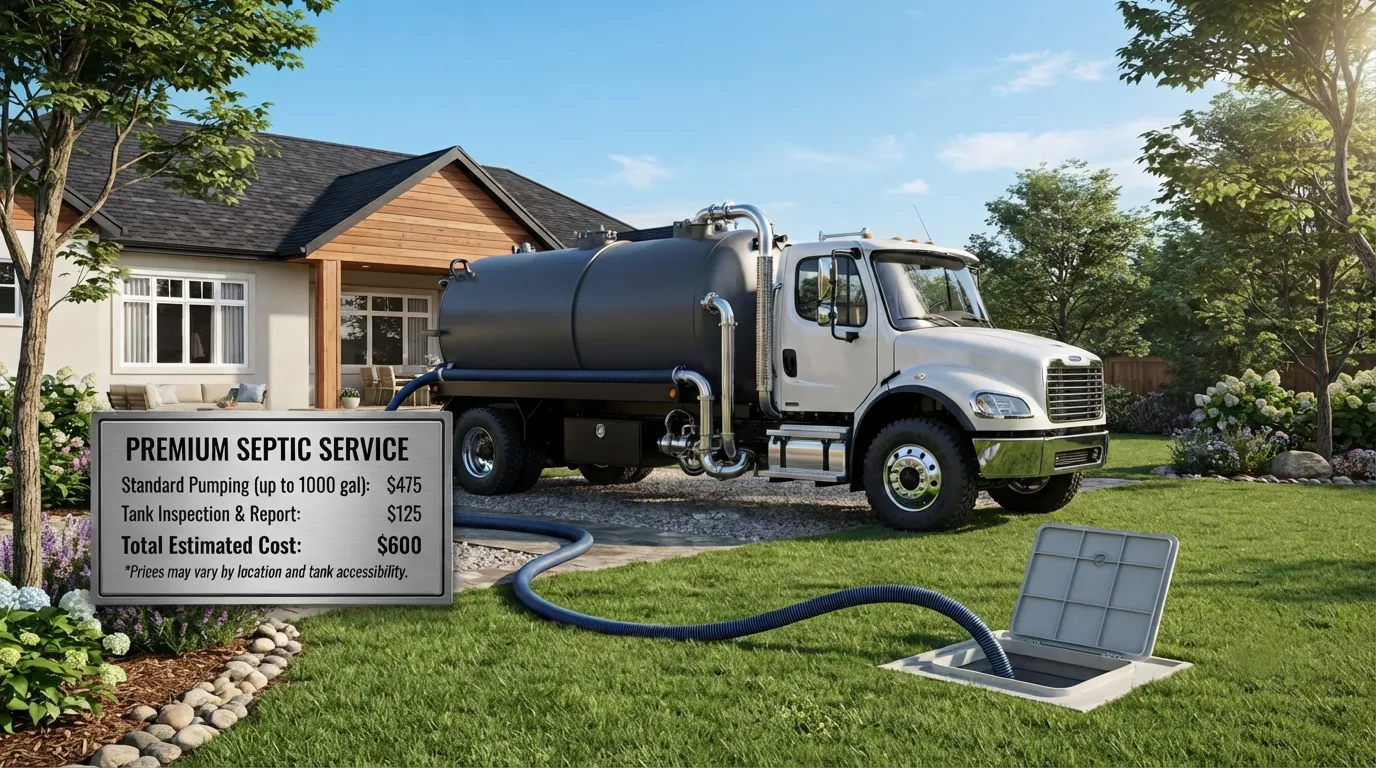
A 1,000 gallon tank is one of the most common residential sizes in Akron, and pumping it usually falls at or near the typical rate in the table above rather than at the high end. Bigger households push tanks toward the low end of the 3 to 5 year pumping interval, since more people means more solids accumulating faster, similar to how a busy jobsite needs a porta potty rental per day schedule closer to daily service. A residential septic tank is typically pumped every 3 to 5 years depending on tank size and household size, and that interval is the single biggest thing you control as a homeowner. Skipping it doesn't save money long term; it just moves the cost from a routine septic pumping service call to an emergency one. If your tank backs up between scheduled visits, emergency septic service exists for exactly that, and it's priced differently than routine maintenance. Homeowners near Barberton, about 8.2 miles southwest of Akron, and Tallmadge, 6.5 miles east, see the same pricing structure we use in the city itself, since tank size and access matter more than zip code.
Most Akron homes need septic tank cleaning every 3 to 5 years, and that range comes down to two things: how big your tank is and how many people live in the house. A family of five running a smaller tank will need service more often than a couple with a large one, the same way a busy event needs more portable restroom rental units than a small backyard gathering. If you're not sure where your system falls, how often to pump a septic tank walks through the math in more detail. Waiting too long between pumps is the most common reason for a surprise backup, and by the time you notice a slow drain or a wet spot in the yard, solids have often already reached the outlet baffle. Septic tank warning signs covers what to watch for between scheduled visits. Commercial kitchens run on a completely different clock: a grease interceptor gets pumped when fats, oils, grease and solids reach 25 percent of the liquid depth, which can happen in weeks, not years, depending on volume, a schedule closer to a monthly porta potty rental than a once-every-few-years septic visit.
Access is the biggest swing factor. A tank with an exposed lid near grade costs less to service than one buried under two feet of soil or landscaping, because digging adds labor time before pumping even starts. Distance from the truck's parking spot to the tank matters too, along with whether the driveway or yard can support a service vehicle without damage, the same clearance concern that applies when scheduling a roll-off dumpster rental delivery. Homes further out, like those near Green, 10.8 miles south of Akron, or Stow, 10.2 miles northeast, don't pay more for distance itself, but rural properties sometimes have longer hose runs or harder ground access that add time to the job. If you're weighing a septic system against a temporary alternative for a renovation or an outbuilding, holding tank rental is worth a look. And if the smell or slow drains have you wondering whether it's really time, septic tank cleaning breaks down the signs that point to pumping versus a smaller fix.
Yes, and it's worth knowing the difference before you call around, because septic pumping is priced as a single service visit, not a multi-day rental. A porta potty rental or a roll-off dumpster rental charges by the day, week, or month because the unit sits on your property, much like a storage container rental or a temporary fence rental; septic pumping is billed for the truck's time on site, once. If you're running a construction project in Akron that needs both a temporary toilet and periodic pumping for an existing system, construction site services bundles that kind of planning. Worksites also fall under different rules than septic systems: OSHA 1926.51(c) sets toilet facility ratios for construction crews, starting at one facility for every 20 workers, which has nothing to do with how a home septic tank gets serviced. If you're building out a jobsite from scratch, how many porta potties do I need and OSHA portable toilet requirements are the right starting points instead of this page.
Most jobs run 150 to 300 dollars for a standard day-of visit, with weekend service adding roughly 50 to 150 dollars on top. Tank size, access, and time since the last pump all affect where you land in that range. Get a firm number by describing your setup on the call.
A 1,000 gallon tank is a common size and typically prices near the middle of the standard range rather than the high end. Actual cost still depends on access and how built up the tank is. Homes on a regular 3 to 5 year schedule usually see fewer surprises.
Every 3 to 5 years for most residential tanks, based on household size and tank capacity. Larger households or smaller tanks lean toward the shorter end. Waiting past that window raises the odds of a backup between visits.
Pricing is driven mostly by tank access and size, not location within the metro area. Homes near Cuyahoga Falls, 9.0 miles north, or Kent, 14.1 miles northeast, see the same pricing structure. Distance from the shop isn't usually the deciding factor.
No. A grease interceptor gets pumped once fats, oils, grease and solids hit 25 percent of liquid depth, often far more frequently than a home tank. Commercial kitchens should check grease trap pumping for that separate schedule and pricing.
Yes. Akron Porta Pros delivers septic tank pumping cost across Akron and the surrounding metro, with same-day and next-day drop-off available on most orders.
Pricing depends on the unit and how long you need it. See our cost breakdown and request a free quote for an exact figure.
Standard rentals include scheduled service — a pump-out, a clean, a restock and fresh deodorizer. Busy or hot-weather sites can be serviced more often.
Call now or request a free quote — clean units, on-time delivery, transparent pricing.